Wednesday, August 6, 2008

Points of Authority

Forfeit the game
Before somebody else
Takes you out of the frame
Puts your name to shame
Cover up your face
You can't run the race
The pace is too fast
You just won't last

Labels:

Tuesday, August 5, 2008

The Indian Narcissus

This king fell in love with his body so much that he wanted to take it with him when he died and ascended to Heaven. Sadly, that would never happen. So he sought the help of the Holy Brahmarishis like Vashishta and Vishwamithra. Vashishta was of little use, in fact the King ended up being cursed to become a Chandala. Finally Vishwamithra with all his powers made him ascend to heaven only to be stopped by Indra. The maverick that he is, Sage Vishwamithra created a new heaven for this King between heaven and earth. Who is this famous King who got his place in Heaven?

..

...

..

..

..

Trishanku was the king in question.he was the son of the son of Prithu was a king in the Solar Dynasty, the dynasty of the Lord Rama. The spat between Sage Vasishta and Vishwamitra is well known.

The aftermath: Now that another heaven was created, it was named Trishanku's heaven and the king shall reside in this heaven from now on. He shall not supersede the command of Indra by ruling his own heaven, and to ensure that, the king shall reside upside down in his heaven. Trishanku is commonly referred to through the phrase "Trishanku's heaven". The phrase describes a middleground or a compromise between ones goals or desires and one's current state or possessions.

Labels: ,

Sunday, August 3, 2008

R.I.P Randy Pausch

Here's an extract from "The Last Lecture" of Randy Pausch. very sweet to read
Steve Seabolt, Vice President of Worldwide Publishing and Marketing for Electonic Arts (EA)

Thank you very much. I don’t mean to sound ungracious by correcting you, but given that our PR
people are probably watching this on webcast, I’d catch heck if I went home and didn’t say that itwas 100 million units for The Sims. [laughter] Not that big numbers matter to Electronic Arts.
[laughter]
I don’t see any empty seats anywhere, which is a good thing, which means I just won a bet from
Randy as a matter of fact. Depending upon who’s version of the story you hear, he either owes me
20 dollars or his new Volkswagen. [laughter] So, I’ll take the car.
It’s a pleasure to be here, thank you very much. I’m going to start by covering Randy’s academic
credentials. It’s a little bizarre for me to be standing here at Carnegie Mellon, which is a school I
couldn’t get into no matter how much I contributed to this institution. [laughter] But, no really, I’m
not kidding! You all think, oh gosh he’s humble. Really, no, I’m not humble at all. Very average SAT
scores, you know, right in the middle of my high school class of 900. Anyway, Randy. Randy earned
– it really pisses me off that Randy’s so smart—actually I called him, we decided about, what, four
weeks, ago and we heard the news went from bad to horrific. It was on a Wednesday night and I
said look – we have two choices. We can play this really straight and very emotional , or we can go
to dark humor. And for those of you who know Randy well, he was like oh, dark humor! So I called
him the next day and I was like, dude you can’t die. And he’s like, what do you mean? And I said,
well, when you die, the average of IQ of Seabolt’s friends is going to like drop 50 points. [laughter] To
which he responded, we need to find you some smarter friends. [laughter] So you’re all smart
because you’re here, so if you want to be my friend, I’ll be over in a corner of the reception room.
Randy earned his undergraduate degree in Computer Science at Brown in 1982. His Ph.D. in CS from
Carnegie Mellon in 1988 and taught at the University of Virginia where he was granted tenure a year
early. He joined the Carnegie Mellon faculty in 1997 with appointments in the CS, HCI and Design
departments. He has authored or co-authored five books and over 60 reviewed journal and
conference proceeding articles, none of which I would understand. With Don Marinelli, he founded
the Entertainment Technology Center, which quickly became the gold standard organization for
training artists and engineers to work together. It is my view and the view of our company,
Electronic Arts, that the ETC is the interactive program by which all others in the world are judged.
I met Randy in the Spring of 2004, and when I look back it’s sort of hard to imagine it’s only been
three years given the depth of our friendship. The ETC already had a very strong relationship with
EA and with Randy. And Randy as he always does, for those of you who know him well, wanted to
learn more, with his own eyes, about how the games business works, and how games really got
made. So he spent a summer in residence at EA, and I was his primary contact point. We were in
my view the odd couple. Randy the brilliant, charming, Carnegie educated CS professor. And me
who went to the University of Iowa on a wing and a prayer. We spent a lot of time together that
semester and for those of you who know Randy well, that’s a lot of turkey sandwiches on white
bread with mayo. [laughter, clapping] My kids tease me about being “white.” There’s nobody more
“white” than Randy. [laughter] We spent an enormous amount of time together. We taught each
other about each other’s very interesting, strange cultures to the other. Academic versus the
corporate world. And we developed a deep friendship woven together with stories about our kids,
our wives, our parents, as well as deep discussions about the paramount nature of integrity ineverything you do, family first, religion, our shared joy in connecting people and ideas, and
deploying money and influence to do good. And the importance of having a lot of laughs along the
way.
Randy’s dedication to making the world a better place is self evident to anyone who has crossed
paths with him. Whether it’s directly influencing students, creating organizations like the ETC,
building tools like Alice or doing what he probably does best, which is bridging cultures. As Ben
Gordon, EA’s Chief Creative Officer, says of Randy, even more important than Randy’s academic,
philanthropic, and entrepreneurial accomplishments has been his humanity and the enthusiasm he
brings to students and coworkers on a daily basis.
For those of you who know Randy, Randy brings a particular zest for life and humor, even while
facing death. To Randy, this is simply another adventure. It is my great honor to introduce Dylan,
Logan and Chloe’s dad, Jai’s husband, and my very dear friend, Dr. Randy Pausch

Labels: , ,

Morgan Freeman- The bird lover

In 1991, Morgan Freeman was offered a lead role in Jurassic Park. Unsure that dinosaurs could make for interesting co-stars, Freeman traveled to the Museum of Natural History to see the “damn beasts” in person. In a 2007 interview with Atlanta Radio Correspondent Veronica Waters, Freeman revealed that he was stunned when he learned that birds descended from dinosaurs. While he turned down the role, Freeman spent the next summer reading books on Ornithology. This would later lead to his desire to narrate the documentary March of the Penguins.

Labels: ,

Friday, May 16, 2008

Earthquake at china and the aftermath

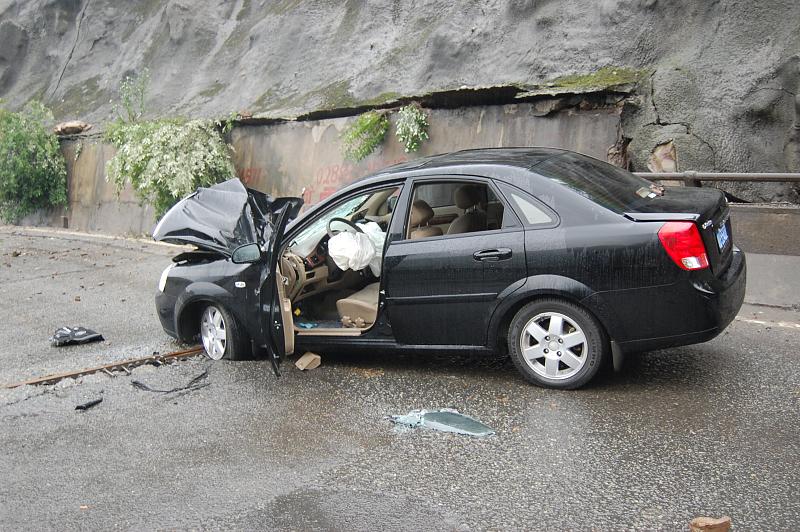
A powerful earthquake recently struck China on May 12th this year. The magnitude of the earthquake was a mind boggling 7.9 on the Richter Scale. In china it was named the Wenchuan Earthquake because the epicenter was in the Wenchuan province of Sichuan.
the death toll is expected to soar to as high as 50,000, with 20,000 confirmed dead. It was a disastrous day for China, which is currently gearing up for the Beijing Olympics, and now it has more on its hands than it can handle. All the highways were damaged and this resulted in the delayed arrival of the troops. lots of damage was inflicted. China Mobile's 2300 stations went offline after the attack. Who knows what happened to the pandas there..

Experts points out that the earthquake has hit an area that has been largely neglected and untouched by China's spectacular economic rise. Health care is poor in inland areas like Sichuan province, where the magnitude-7.9 quake struck, highlighting the yawning gap between prosperous urban dwellers and struggling rural people.

News report indictates that the poorer, rural villages were hardest hit. Swaminathan Krishnan, assistant professor of civil engineering and geophysics at the California Institute of Technology said: "the earthquake occurred in the rural part of China. Presumably, many of the buildings were just built; they were not designed, so to speak."
Swaminathan Krishnan further added: "There are very strong building codes in China, which take care of earthquake issues and seismic design issues. But many of these buildings presumably were quite old and probably were not built with any regulations overseeing them."

Labels: , , , , ,

Friday, May 9, 2008

Dmitry medvedev

Dimitry Medvedev has just taken up the presidency of Russia, the worlds second most powerful country.
He was the Chairman of Gazprom, which recently overtook china mobil to become the 3rd largest company in the world. Now he has resigned the post and is looking forward to take office as the youngest president of Russia.
With Putin at the helm of affairs, as the PM, medvedev will have a hopefully strong control over the government for the next few years.

Some facts about Medvedev

Medvedev met his wife, Svetlana, in seventh grade. The two married in 1989 and have one son, Ilya. Svetlana organizes art and fashion events and is a society figure

Mikhail Gorbachev was his neighbour (birds of the same feather... )

In the 1990s, Medvedev became involved in local politics. It was during this period that he met Vladimir Putin, when they both worked at the St. Petersburg City Hall.

Medvedev is a fan of such rock-and-roll groups as Deep Purple, Pink Floyd, Led Zeppelin, and Black Sabbath. In February 2008, Medvedev lived out a longtime dream when he attended a Deep Purple concert at the Kremlin

The Bald and Hairy tradition

There is this long standing theory that bald and hairy leaders alternate each other at kremlin in strict succession. this rule has not been broken for close to a whopping 130 years.

This rule has never been broken for close to 130 years, ever since the balding Alexander III took over from hairy father in 1881.

Nicolas II, who succeeded Alexander III, was hairy, Vladimir Lenin was bald, Joseph Stalin was hairy, Nikita Khrushchev was bald, Leonid Brezhnev was hairy. Balding Yuri Andropov was succeeded by hairy Nikolai Chernenko, who left his seat to bald Mikhail Gorbachev.

Hairy Boris Yeltsin promoted balding Vladimir Putin, who has now supported hairy Dmitry Medvedev as his preferred successor.

Some claim, for instance, that hairy Yevgeny Primakov pulled out of the 2000 presidential race against baldish Mr. Putin because he did not fit into the hairy-bald succession pattern and, therefore, had no chance of winning.

Adherents of the quirky bald-hairy theory say that Mr. Medvedev is assured of victory in the March 2 presidential poll, not so much because he has the support of the incumbent President, but because he is hairy enough.

Labels: , , , ,

Tuesday, May 6, 2008

Global Warming

What causes global warming?
Carbon dioxide and other air pollution that is collecting in the atmosphere like a thickening blanket, trapping the sun's heat and causing the planet to warm up. Coal-burning power plants are the largest U.S. source of carbon dioxide pollution -- they produce 2.5 billion tons every year. Automobiles, the second largest source, create nearly 1.5 billion tons of CO2 annually.

Here's the good news: technologies exist today to make cars that run cleaner and burn less gas, modernize power plants and generate electricity from nonpolluting sources, and cut our electricity use through energy efficiency. The challenge is to be sure these solutions are put to use.

Is the earth really getting hotter?
Yes. Although local temperatures fluctuate naturally, over the past 50 years the average global temperature has increased at the fastest rate in recorded history. And experts think the trend is accelerating: the 10 hottest years on record have all occurred since 1990. Scientists say that unless we curb global warming emissions, average U.S. temperatures could be 3 to 9 degrees higher by the end of the century.

Are warmer temperatures causing bad things to happen?
Global warming is already causing damage in many parts of the United States. In 2002, Colorado, Arizona and Oregon endured their worst wildfire seasons ever. The same year, drought created severe dust storms in Montana, Colorado and Kansas, and floods caused hundreds of millions of dollars in damage in Texas, Montana and North Dakota. Since the early 1950s, snow accumulation has declined 60 percent and winter seasons have shortened in some areas of the Cascade Range in Oregon and Washington.

Of course, the impacts of global warming are not limited to the United States. In 2003, extreme heat waves caused more than 20,000 deaths in Europe and more than 1,500 deaths in India. And in what scientists regard as an alarming sign of events to come, the area of the Arctic's perennial polar ice cap is declining at the rate of 9 percent per decade.

Is global warming making hurricanes worse?
Global warming doesn't create hurricanes, but it does make them stronger and more dangerous. Because the ocean is getting warmer, tropical storms can pick up more energy and become more powerful. So global warming could turn, say, a category 3 storm into a much more dangerous category 4 storm. In fact, scientists have found that the destructive potential of hurricanes has greatly increased along with ocean temperature over the past 35 years.

Is there really cause for serious concern?
Yes. Global warming is a complex phenomenon, and its full-scale impacts are hard to predict far in advance. But each year scientists learn more about how global warming is affecting the planet, and many agree that certain consequences are likely to occur if current trends continue. Among these:

* Melting glaciers, early snowmelt and severe droughts will cause more dramatic water shortages in the American West.

* Rising sea levels will lead to coastal flooding on the Eastern seaboard, in Florida, and in other areas, such as the Gulf of Mexico.

* Warmer sea surface temperatures will fuel more intense hurricanes in the southeastern Atlantic and Gulf coasts.

* Forests, farms and cities will face troublesome new pests and more mosquito-borne diseases.

* Disruption of habitats such as coral reefs and alpine meadows could drive many plant and animal species to extinction.

Could global warming trigger a sudden catastrophe?
Recently, researchers -- and even the U.S. Defense Department -- have investigated the possibility of abrupt climate change, in which gradual global warming triggers a sudden shift in the earth's climate, causing parts of the world to dramatically heat up or cool down in the span of a few years.

In February 2004, consultants to the Pentagon released a report laying out the possible impacts of abrupt climate change on national security. In a worst-case scenario, the study concluded, global warming could make large areas of the world uninhabitable and cause massive food and water shortages, sparking widespread migrations and war.

While this prospect remains highly speculative, many of global warming's effects are already being observed -- and felt. And the idea that such extreme change is possible underscores the urgent need to start cutting global warming pollution.

What country is the largest source of global warming pollution?
The United States. Though Americans make up just 4 percent of the world's population, we produce 25 percent of the carbon dioxide pollution from fossil-fuel burning -- by far the largest share of any country. In fact, the United States emits more carbon dioxide than China, India and Japan, combined. Clearly America ought to take a leadership role in solving the problem. And as the world's top developer of new technologies, we are well positioned to do so -- we already have the know-how.

How can we cut global warming pollution?
It's simple: By reducing pollution from vehicles and power plants. Right away, we should put existing technologies for building cleaner cars and more modern electricity generators into widespread use. We can increase our reliance on renewable energy sources such as wind, sun and geothermal. And we can manufacture more efficient appliances and conserve energy.

Why aren't these technologies more commonplace now?
Because, while the technologies exist, the corporate and political will to put them into widespread use does not. Many companies in the automobile and energy industries put pressure on the White House and Congress to halt or delay new laws or regulations -- or even to stop enforcing existing rules -- that would drive such changes. From requiring catalytic converters to improving gas mileage, car companies have fought even the smallest measure to protect public health and the environment. If progress is to be made, the American people will have to demand it.

Do we need new laws requiring industry to cut emissions of global warming pollution?
Yes. The Bush administration has supported only voluntary reduction programs, but these have failed to stop the growth of emissions. Even leaders of major corporations, including companies such as DuPont, Alcoa and General Electric, agree that it's time for the federal government to create strong laws to cut global warming pollution. Public and political support for solutions has never been stronger. Congress is now considering fresh proposals to cap emissions of carbon dioxide and other heat-trapping pollutants from America's largest sources -- power plants, industrial facilities and transportation fuels.

Stricter efficiency requirements for electric appliances will also help reduce pollution. One example is the 30 percent tighter standard now in place for home central air conditioners and heat pumps, a Clinton-era achievement that will prevent the emission of 51 million metric tons of carbon -- the equivalent of taking 34 million cars off the road for one year. The new rule survived a Bush administration effort to weaken it when, in January 2004, a federal court sided with an NRDC-led coalition and reversed the administration' s rollback.

Is it possible to cut power plant pollution and still have enough electricity?
Yes. First, we must use more efficient appliances and equipment in our homes and offices to reduce our electricity needs. We can also phase out the decades-old, coal-burning power plants that generate most of our electricity and replace them with cleaner plants. And we can increase our use of renewable energy sources such as wind and sun. Some states are moving in this direction: California has required its largest utilities to get 20 percent of their electricity from renewable sources by 2017, and New York has pledged to compel power companies to provide 25 percent of the state's electricity from renewable sources by 2013.

How can we cut car pollution?
Cost-effective technologies to reduce global warming pollution from cars and light trucks of all sizes are available now. There is no reason to wait and hope that hydrogen fuel cell vehicles will solve the problem in the future. Hybrid gas-electric engines can cut global warming pollution by one-third or more today; hybrid sedans, SUVs and trucks from several automakers are already on the market.

But automakers should be doing a lot more: They've used a legal loophole to make SUVs far less fuel efficient than they could be; the popularity of these vehicles has generated a 20 percent increase in transportation- related carbon dioxide pollution since the early 1990s. Closing this loophole and requiring SUVs, minivans and pick-up trucks to be as efficient as cars would cut 120 million tons of carbon dioxide pollution a year by 2010. If automakers used the technology they have right now to raise fuel economy standards for new cars and light trucks to a combined 40 m.p.g., carbon dioxide pollution would eventually drop by more than 650 million tons per year as these vehicles replaced older models.

For more information on hybrid vehicles, see NRDC's hybrid guide.

What can I do to help fight global warming?
There are many simple steps you can take right now to cut global warming pollution. Make conserving energy a part of your daily routine. Each time you choose a compact fluorescent light bulb over an incandescent bulb, for example, you'll lower your energy bill and keep nearly 700 pounds of carbon dioxide out of the air over the bulb's lifetime. By opting for a refrigerator with the Energy Star label -- indicating it uses at least 15 percent less energy than the federal requirement -- over a less energy-efficient model, you can reduce carbon dioxide pollution by nearly a ton in total. Join NRDC in our campaign against global warming.

Labels: